

Description
Blueface Angelfish Pomacanthus Xanthometopon
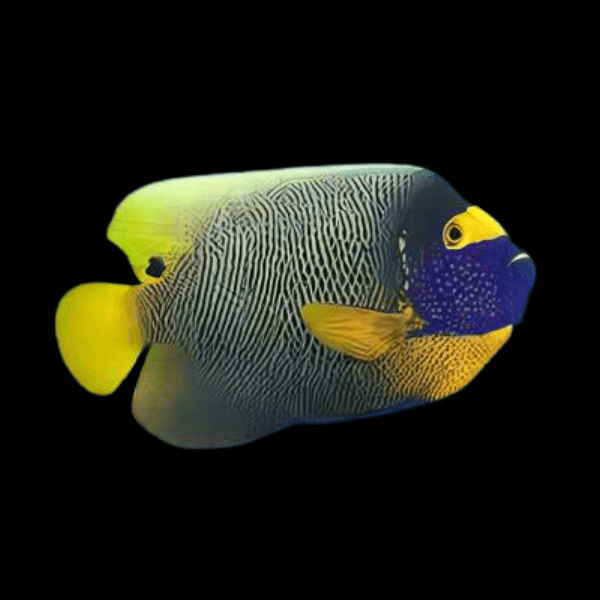
Overview: The Blueface Angelfish, also known as Pomacanthus xanthometopon, is a stunning marine fish that captivates aquarists with its vibrant colors and dynamic patterns. This species showcases a mix of bright blue and yellow hues, with a distinctive blue face that gives it its name. Growing up to 15 inches in captivity, they make a bold statement in any marine aquarium.
Origin: Native to the Indo-Pacific region, Blueface Angelfish are found from the Maldives to Japan, and south to the Great Barrier Reef. They prefer coral-rich areas and lagoons, typically in depths ranging from 2 to 25 meters.
Feeding: Omnivorous by nature, they require a varied diet to maintain their health and coloration. Offer a mix of marine algae, spirulina, mysis shrimp, and other high-quality frozen preparations. Incorporating vegetables and foods rich in carotenoids will help in preserving their vibrant colors.
Tank Mates: Blueface Angelfish are best kept with other semi-aggressive species. They may show aggression towards other angelfish, especially in smaller tanks. Ideal tank mates include larger fish such as tangs, wrasses, and some species of butterflyfish that do not compete directly for food.
Aggression: While generally peaceful with non-similar species, Blueface Angelfish can exhibit territorial behavior, especially towards their own kind or similarly shaped fish. A larger aquarium (minimum 125 gallons) with plenty of hiding spots can help mitigate aggressive tendencies.
Experience Level: Due to their specific care requirements and potential size, Blueface Angelfish are recommended for intermediate to advanced aquarists. Ensuring a varied diet and maintaining pristine water conditions are crucial for their well-being.
Water Parameters:
Overview: The Blueface Angelfish, also known as Pomacanthus xanthometopon, is a stunning marine fish that captivates aquarists with its vibrant colors and dynamic patterns. This species showcases a mix of bright blue and yellow hues, with a distinctive blue face that gives it its name. Growing up to 15 inches in captivity, they make a bold statement in any marine aquarium.
Origin: Native to the Indo-Pacific region, Blueface Angelfish are found from the Maldives to Japan, and south to the Great Barrier Reef. They prefer coral-rich areas and lagoons, typically in depths ranging from 2 to 25 meters.
Feeding: Omnivorous by nature, they require a varied diet to maintain their health and coloration. Offer a mix of marine algae, spirulina, mysis shrimp, and other high-quality frozen preparations. Incorporating vegetables and foods rich in carotenoids will help in preserving their vibrant colors.
Tank Mates: Blueface Angelfish are best kept with other semi-aggressive species. They may show aggression towards other angelfish, especially in smaller tanks. Ideal tank mates include larger fish such as tangs, wrasses, and some species of butterflyfish that do not compete directly for food.
Aggression: While generally peaceful with non-similar species, Blueface Angelfish can exhibit territorial behavior, especially towards their own kind or similarly shaped fish. A larger aquarium (minimum 125 gallons) with plenty of hiding spots can help mitigate aggressive tendencies.
Experience Level: Due to their specific care requirements and potential size, Blueface Angelfish are recommended for intermediate to advanced aquarists. Ensuring a varied diet and maintaining pristine water conditions are crucial for their well-being.
Water Parameters:
- Temperature: 72°F - 82°F (22°C - 28°C)
- pH: 8.1 - 8.4
- Salinity: 1.020 - 1.025 sg
- Ammonia/Nitrite: 0 ppm
- Nitrate: <20 ppm
DX courier delivery is £20 per livestock order.
Delivery is scheduled for your selected delivery date and typically arrives before 1pm.
There is no minimum or maximum order value.
Additional information:
- In-stock livestock orders will be processed and dispatched for delivery on the date selected on the cart/basket page.
- Available delivery days are Wednesday, Thursday, Friday, and Saturday.
- If any stock issues affect your chosen delivery date, we will contact you as soon as possible by email or telephone.
- Shipping for dry goods is charged separately from livestock delivery. Dry goods are dispatched according to our standard delivery policy.
- All livestock remains covered by our 7-day guarantee.