
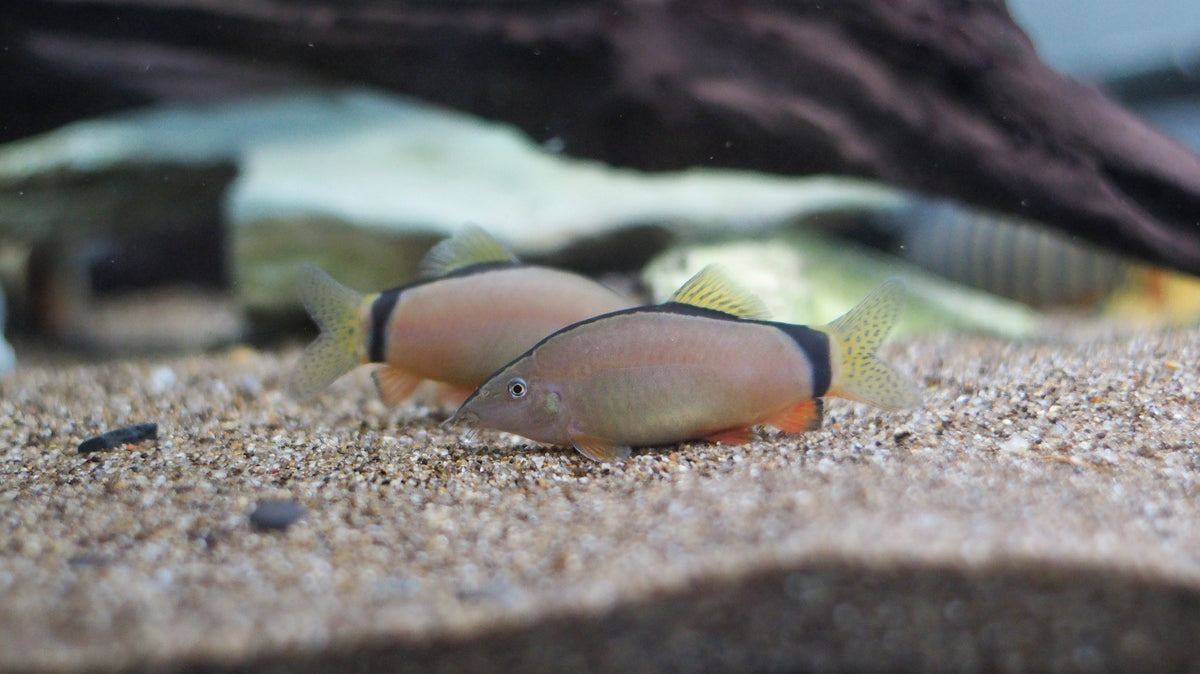
Skunk Loach (Yasuhikotakia morleti): The Feisty Character Fish with a Big Personality
If you're looking for a fish with plenty of character, attitude and activity, the Skunk Loach is hard to beat. Instantly recognisable thanks to the distinctive black stripe running from its head to tail, this energetic little loach has been a favourite amongst aquarists for decades. While not always the easiest community fish, those who understand its temperament are rewarded with an endlessly entertaining addition to their aquarium.
In this species profile, we'll explore everything you need to know about keeping Skunk Loaches successfully, from their natural habitat and behaviour to feeding, tank mates and aquarium care.
Quick Facts
Scientific Name: Yasuhikotakia morleti
Common Name: Skunk Loach
Origin: Thailand, Laos and Cambodia
Maximum Size: 8-10cm (3-4 inches)
Lifespan: 8-12 years
Temperament: Semi-aggressive, territorial
Difficulty Level: Intermediate
Minimum Tank Size: 90 litres
Diet: Omnivore
Temperature: 24-28°C
pH: 6.5-7.5
Natural Habitat
Skunk Loaches originate from the rivers, streams and floodplain systems of Southeast Asia, particularly within the Mekong River basin. In the wild, they inhabit flowing waters with sandy or gravel substrates, plenty of submerged roots and abundant hiding places.
Like many loach species, they spend much of their time exploring the bottom of the riverbed in search of small invertebrates, worms, crustaceans and organic matter. Their streamlined bodies and downturned mouths are perfectly adapted for this constant foraging behaviour.
Appearance
The Skunk Loach gets its common name from the bold black stripe that runs along the length of its body, resembling the markings of a skunk. The body itself is typically cream, silver or golden-brown, creating a striking contrast against the dark stripe.
Young specimens are especially attractive, often displaying bright colours and an energetic swimming style. As they mature, their colours deepen and their personalities become even more pronounced.
Unlike some of their larger loach relatives, such as Clown Loaches, Skunk Loaches remain relatively compact, making them a suitable option for medium-sized aquariums.
Behaviour and Personality
This is where Skunk Loaches truly stand out.
They are highly active, inquisitive and intelligent fish that rarely stay still for long. Owners often describe them as having "big fish personalities" packed into a relatively small body.
However, prospective keepers should understand that Skunk Loaches are not always peaceful community fish. As they mature, many individuals become increasingly territorial and assertive, especially towards other bottom-dwelling species.
While some specimens coexist peacefully in a well-planned community aquarium, others can be surprisingly feisty and may frequently chase tank mates away from their preferred hiding spots.
For this reason, Skunk Loaches are generally suited to aquarists with some experience in managing fish behaviour and aquarium stocking.
Aquarium Setup
Creating the right environment is key to maintaining healthy and active Skunk Loaches.
A tank of at least 90 litres is recommended, although larger aquariums are preferable when keeping groups or mixing them with other species.
Ideal Tank Conditions
- Temperature: 24-28°C
- pH: 6.5-7.5
- Moderate water flow
- Excellent filtration
- High oxygen levels
- Soft sand or smooth gravel substrate
Because Skunk Loaches spend so much time on the bottom of the aquarium, sharp gravel should be avoided as it can damage their sensitive barbels.
Providing lots of caves, driftwood, rockwork and dense planting will help reduce territorial disputes and allow fish to establish their own territories.
Like many loaches, they also appreciate shaded areas and secure hiding places where they can retreat when feeling threatened.
Are Skunk Loaches Schooling Fish?
This is a question many aquarists ask.
Unlike species such as Clown Loaches that thrive in larger social groups, Skunk Loaches can be somewhat unpredictable. Some aquarists keep them individually, while others have success maintaining small groups in larger aquariums.
When kept together, a clear hierarchy often develops, and occasional chasing is completely normal. The key is to provide sufficient space and multiple hiding places to minimise aggression.
In smaller aquariums, keeping a single specimen is often the safer option.
Feeding
Skunk Loaches are enthusiastic feeders and rarely prove fussy at mealtimes.
A varied diet will help maintain both their colouration and overall health.
Suitable foods include:
- Quality sinking pellets
- Sinking algae wafers
- Frozen bloodworm
- Frozen brine shrimp
- Daphnia
- Tubifex
- Live foods
- Blanched vegetables such as courgette and cucumber
They are also well known for their appetite for pest snails. Many aquarists introduce Skunk Loaches specifically to help control unwanted snail populations, although they should never be purchased solely as a clean-up solution.
Tank Mates
Choosing compatible tank mates is one of the most important considerations with this species.
Good choices include:
- Larger tetras
- Rainbowfish
- Barbs
- Danios
- Robust rasboras
- Larger gouramis
Species to avoid include:
- Slow-moving fish with long fins
- Very peaceful bottom dwellers
- Small shrimp
- Delicate fish that may be intimidated
Compatibility ultimately depends on the individual fish, as some Skunk Loaches are significantly more territorial than others.
Common Health Issues
Skunk Loaches are generally hardy when maintained in stable conditions, but they can be sensitive to poor water quality.
Common problems include:
- Whitespot (Ich)
- Bacterial infections
- Stress-related illnesses
- Barbel erosion from poor substrates
Regular maintenance, stable water parameters and a varied diet go a long way towards preventing most health issues.
Because loaches have relatively small scales compared to many other fish species, care should be taken when using medications, as they can sometimes be more sensitive to treatments.
Breeding
Breeding Skunk Loaches in home aquariums is extremely rare and remains largely undocumented. Most specimens available within the aquarium trade are commercially bred or farm-raised in Asia.
As a result, hobbyists should not expect breeding to occur naturally in community setups.
Is the Skunk Loach Right for You?
The Skunk loach isn't the ideal choice for every aquarist, but for those who appreciate active fish with plenty of personality, it can be a fantastic addition to the right aquarium.
Its bold appearance, constant activity and entertaining behaviour make it a standout species. However, potential keepers should also be prepared to accommodate its occasionally territorial nature and choose tank mates carefully.
Give a Skunk Loach the right environment, a varied diet and plenty of places to explore, and you'll have one of the most engaging fish in your aquarium for many years to come.
To browse our range of Loaches please click here.
To browse live fish at Real Aquatics online please click here.
Photo credit(s): Shutterstock


