
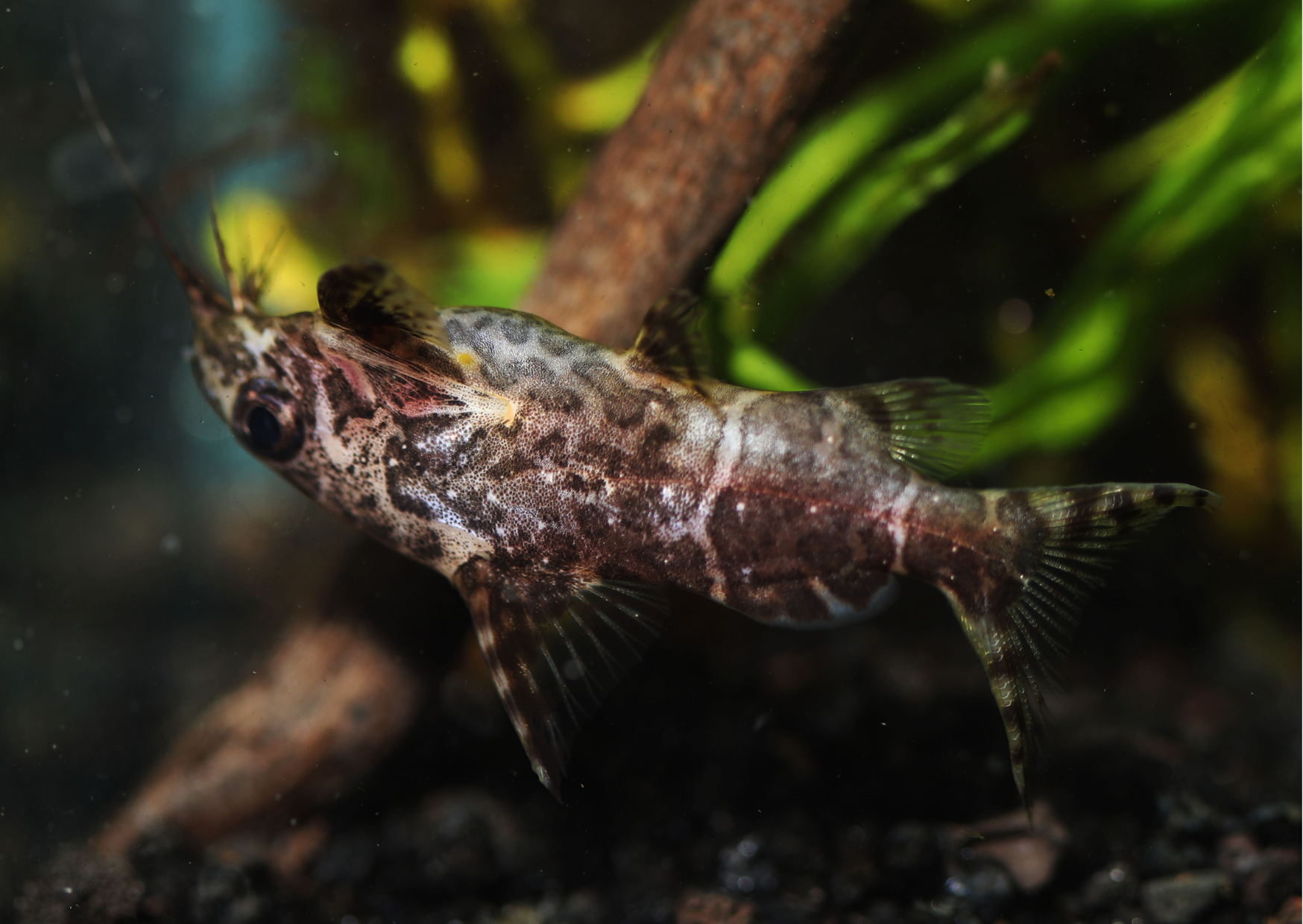
Upside Down Catfish Care Guide
Discover the complete care requirements for Upside Down Catfish (Synodontis nigriventris). Learn about tank setup, water parameters, diet, tank mates, and health tips to keep these quirky fish thriving.
Introduction
Upside Down Catfish (Synodontis nigriventris) are fascinating freshwater fish known for their unique habit of swimming belly-up. Native to the Congo River Basin, they are peaceful, hardy, and can live up to 15 years in captivity. This guide covers everything you need to know to provide the best care for them.

Tank Setup & Environment
Tank Size: Minimum 20 gallons for small groups; 40–55 gallons recommended for larger communities.
Group Size: Best kept in groups of 3–6 to reduce stress.
Substrate: Soft sand or fine gravel to protect sensitive barbels.
Decor: Provide driftwood, caves, and live or artificial plants for hiding and surface feeding.
Lighting: Moderate; avoid overly bright setups.
Filtration: Gentle but efficient filtration to maintain clean water.
Water Parameters
Temperature: 75–82°F (24–28°C)
pH: 6.0–8.0 (slightly acidic to neutral)
Hardness: Soft to moderately hard water
Maintenance: Weekly water changes (20–30%) and regular monitoring are essential.
Diet & Feeding
Upside Down Catfish are omnivores:
Staple Foods: High-quality sinking pellets or wafers.
Protein Sources: Bloodworm, brine shrimp, mosquito larvae.
Vegetable Matter: Algae wafers, blanched spinach, cucumber
Feeding Tip: Feed at night or in dim light, as they are more active then.
Tank Mates
Compatible Species: Peaceful community fish such as tetras, rasboras, corydoras, and small gouramis.
Avoid: Aggressive or overly large fish that may stress or out compete them.
Health & Common Issues
Stress Signs: Constant hiding, swimming upright instead of inverted.
Diseases: Susceptible to ich and bacterial infections if water quality is poor.
Prevention: Maintain pristine water, avoid sharp decor, and provide a balanced diet.
Breeding Notes
Difficulty: Rarely bred in home aquariums; most are wild-caught.
Requirements: Large, well-structured tanks with soft water and hiding spots
Key Takeaways
Keep Upside Down Catfish in groups for comfort.
Provide driftwood and shaded areas for natural feeding behavior.
Maintain stable water conditions and a varied omnivorous diet.
Expect a long lifespan of up to 15 years.
To browse our range of catfish food please click here.
To browse our range of algae treats for tropical fish online please click here.
Photo credit(s): Shutterstock
Related keywords to search: Upside Down Catfish, Synodontis, catfish tank, freshwater aquarium fish, catfish diet, peaceful community fish.


